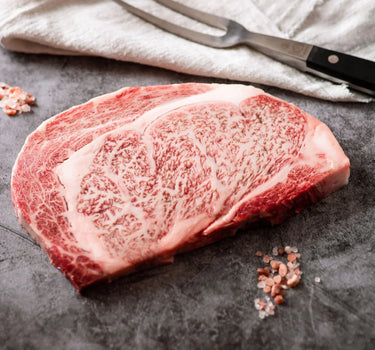
Wagyu Japanese Beef
Premium Japanese beef is globally recognised by the name "Wagyu", a term that literally means "Japanese cattle". Its reputation stems from centuries of genetic selection, tradition, and rigorous care at every stage of rearing.
In the late 19th century, Japanese cattle were crossbred with British and European breeds, giving rise to the four pure Wagyu lineages known today: Kuroge Washu (Japanese Black), Akage Washu (Japanese Brown), Nihon Tankaku Washu (Japanese Shorthorn) and Mukaku Washu (Japanese Polled).
Among these, Kuroge Washu is the most highly valued and responsible for most of the excellent Wagyu, thanks to its exceptional marbling and extremely delicate texture. The Nihon Tankaku and Mukaku breeds remain practically exclusive to Japan, reinforcing the rarity and authenticity of this unique meat.
From birth to the final growth phase, the animals are monitored with high standards of care and controlled feeding. More than a production method, Wagyu rearing reflects a philosophy of dedication, patience and respect for the animal — elements that result in meat with a deep flavour, buttery texture and incomparable quality.
Wagyu calves remain on the farm between 7 and 10 months of age. After this period, they are sent to specialised fattening units, where they are carefully monitored until they reach approximately 700 kg.
In addition to natural forages, such as grass and rice straw, the animals receive concentrates and whole-plant silage, essential for promoting the delicate texture and the white, uniform fat that distinguish this premium meat.
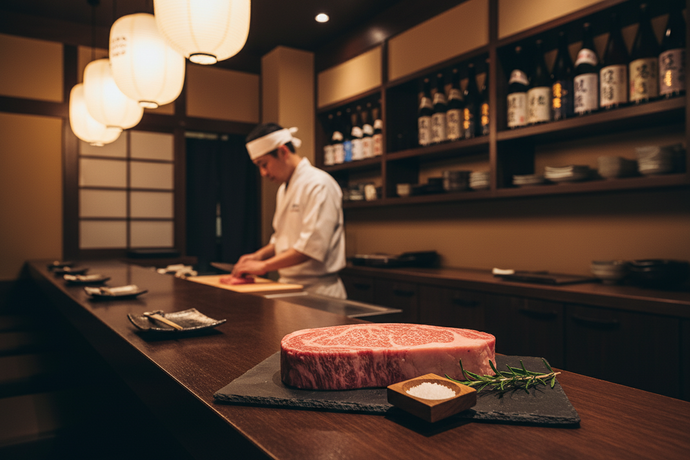
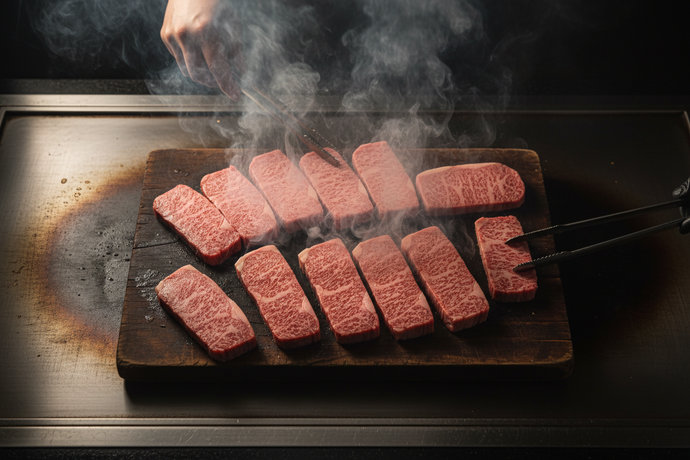
The Kuroge Japanese Black Breed
Considered the most popular variety, it accounts for about 90% of wagyu produced. The breed also consists of three main bloodlines: Tajima, Kedaka, and Shimane. The prime example of Kuroge beef is Kobe.
Other premium bloodlines from the Kuroge family, such as Omi, Matsuzaka, Miyazaki, Saga, and Kagoshima, are raised in specific regions and only certified under equally strict conditions.
Only meat from virgin female cows from the Mie region can be considered Matsuzaka, while Omi beef can only originate from cattle raised in Shiga prefecture.


The Tajima Bloodline and Kobe Beef
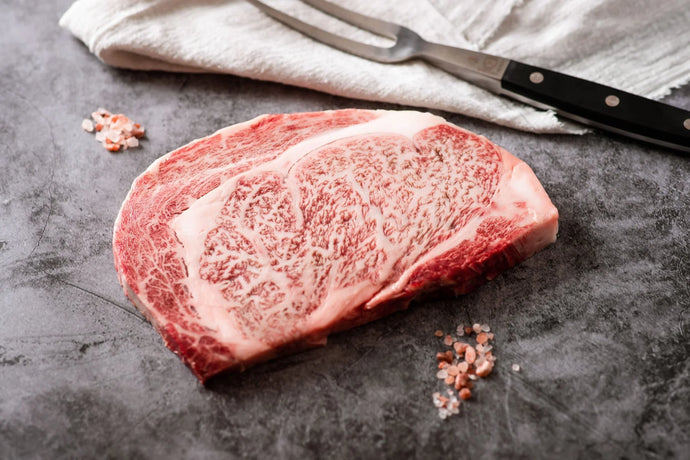
Kobe beef owes its unique richness to streaks of intramuscular fat that run through it (marbling) and is known for its buttery texture, making this product so sought after and accentuating its rarity. Only purebred Tajima cattle raised and slaughtered in Hyogo Prefecture can be certified as "Kobe Beef."
Thus, it is typically said that all Kobe is Wagyu, but not all Wagyu is Kobe, and while each of these breeds has a remarkable level of marbling, each has its own unique profile and flavour.

Australia's Wagyu breeds are the best in the world outside Japan
Australian Wagyu
In 1988, Australian farmers imported Wagyu cattle genetics and crossbred them with Hereford and Angus, known as F1 Wagyu. Currently, there is already considerable production of purebred Wagyu cattle, known as Fullblood Wagyu.
The Australian marbling classification ranges from 0 to 9+, with 0 being the lowest and 9+ being the highest and most valuable.
Australian Fullblood Wagyu typically has an average marbling score of 8, three times higher than the average of any other breed.
Control and Security
To ensure that Wagyu beef continues to be an important resource and to maintain basic information for reproductive improvement, calves are individually registered.
This registration includes information on birth, sex, breed, producer data, fattening method, DNA, and pedigree, tracing back up to three generations of parents, grandparents, and great-grandparents.

Marbling score
Marbling represents the amount and distribution of intramuscular fat within meat. The higher the score, the more intense the juiciness, tenderness, and flavour depth of the cut will be. Marbling classifications are used to identify levels of quality and consistency, especially in premium meats such as Wagyu. Cuts with high marbling offer a more tender, rich, and sophisticated experience.